
Le tabac à chicha a une riche histoire qui s'étend sur plusieurs siècles. Explorer son histoire, son développement et sa pertinence culturelle vous aidera à apprécier l'art de fumer le narguilé.
À l’heure actuelle, cette pratique ancienne est devenue un phénomène mondial adopté par de nombreuses personnes.
Allons-y directement :
Origine des terminologies du tabac à chicha
Dans le monde du tabac à chicha, il existe de nombreux mots courants. Dans cette section, nous explorerons comment les gens ont commencé à utiliser ces mots en relation avec le tabagisme de la chicha.
- Origine du mot “ chicha ” : Le mot persan “ shishe ”, qui signifie verre, est à l'origine du terme “ chicha ”. Il fait référence au socle en verre du dispositif à chicha classique. Au fil du temps, notamment dans les sociétés du Moyen-Orient, la “ chicha ” est devenue liée à l’ensemble de l’appareil de conduite d’eau.
- Comment est né le terme “ narguilé ” : “ Nargile ” vient du terme persan “ nārgil ”, qui signifie noix de coco, puisque les premières pipes étaient fabriquées à partir de noix de coco. Populaire en Turquie et dans d’autres pays, le “ narguilé ” a rapidement été associé au narguilé dans de nombreuses langues et cultures.
- Origine de l’expression “ chicha ” : Dérivé du mot arabe “ huqqa ”, qui signifie “ pot ”.“narguilé” a finalement gagné en popularité en Inde. L'influence coloniale britannique a répandu le nom en le popularisant comme une référence au dispositif de pipe à eau utilisé pour fumer du tabac aromatisé.

Invention du tabac à chicha
Généralement lié au narguilé ou à la pipe à eau, tabac à chicha a ses racines en Inde au 16ème siècle.
a) Introduction du tabac
Un changement important s’est produit lorsque le tabac est arrivé au Moyen-Orient au XVIe siècle. Vous serez intrigué d’apprendre que les locaux, qui ont commencé à expérimenter cette plante du “ nouveau monde ”, en étaient fascinés.
Les locaux combinaient le tabac avec des herbes et des épices, produisant des sensations de tabagisme uniques qui sont immédiatement devenues populaires. C'était une période de découverte ; chaque nouvelle combinaison révélait une saveur et une expression culturelle différentes.
b) Invention de la chicha
L’invention du narguilé est généralement attribuée à un médecin indien nommé Hakim Abul-Fath Gilani, qui a vécu dans les années 1500.
Son objectif ?
Pour vous offrir une approche plus sûre pour profiter du tabac par filtration de l'eau.
Simple mais révolutionnaire, sa conception incorporait une base, une tige et un bol, dont les pièces sont encore fondamentales pour les narguilés aujourd'hui. Gilani a aidé les gens de son époque, et vous maintenant, à profiter d'une expérience de tabac plus raffinée en concevant cet appareil.
c) Évolution de la conception
À partir d'une coquille de noix de coco et d'une pipe en bambou, la chicha s'est transformée en pièces détaillées avec des sculptures et des designs complexes. Les chichas modernes ont toujours cette touche élégante, que vous pouvez associer à des millénaires de savoir-faire.
Chaque modification de conception a livré une expérience unique, qu'il s'agisse d'une base plus grande pour plus de refroidissement ou d'une touche créative pour un attrait visuel. Des configurations les plus basiques aux très belles pièces personnalisées, la chicha que vous voyez aujourd'hui est le résultat de générations d'inventivité répondant à tous les goûts.
d) Diffusion et importance culturelle
Tabac aromatisé
Tabac à chicha aromatisé a changé la donne dans le monde de la chicha. Au XVIIIe siècle, l’ajout de fruits, d’herbes et d’épices au tabac est devenu populaire et a offert des alternatives au-delà des goûts conventionnels du tabac. Ce développement s'est concentré non seulement sur la saveur mais également sur la création d'une expérience sensorielle unique.
Chaque goût est devenu un outil vous permettant de personnaliser votre séance, car la chicha était bien plus que de la simple fumée. C'était un rituel social avec une saveur et un arôme riches.
Influence persane
En Perse, le tabac à chicha a pris une nouvelle signification. Les artisans persans ont développé des narguilés avec de belles finitions et des designs détaillés. Aujourd'hui, l'appréciation d'un narguilé bien fait est le résultat de l'influence perse.
Fumer la chicha a évolué dans la société perse en tant que symbole de statut et d’intellect. Chaque narguilé élaboré a révélé la créativité et l'héritage de la chicha, vous permettant de vous y connecter.

Chronologies importantes dans l’histoire du tabac à chicha
· 16ème siècle
L’histoire du tabac à chicha commence au XVIe siècle, lorsque les commerçants portugais apportèrent le tabac en Inde. Cette époque symbolise un tournant lorsque Hakim Abul-FathGilani (le médecin de l'empereur moghol Akbar) conçut le premier conduite d'eau.
Son idée fondamentale mais créative était de filtrer la fumée du tabac à travers l’eau pour réduire son impact négatif.
Vous pouvez imaginer comment cette première chicha, créée à partir d'une coquille de noix de coco et d'un tuyau en métal, séduirait la classe dirigeante moghole de la cour royale.
Par la suite, cette création a infiltré les cercles nobles en dehors de la cour et est rapidement devenue un symbole de sophistication et de statut social en Inde. C'est ici que les bases de votre chicha contemporaine ont été posées à l'origine, combinant le tabac avec un travail exquis et des événements sociaux.
· 17e siècle
Au XVIIe siècle, la culture de la chicha est née en Inde, puis s'est répandue en Perse puis dans l'Empire ottoman. Le narguilé est devenu populaire parmi la noblesse et la classe supérieure persanes à cette époque. La conception initiale et pratique reflétant l’influence artistique persane a commencé à évoluer vers des formes plus complexes.
Les artistes persans ont créé de magnifiques bases en verre avec des gravures élaborées et des composants métalliques ornés. L'utilisation de verre vibrant a gagné en popularité, a amplifié sa beauté et l'a qualifié de véritable œuvre d'art.
Profondément ancrée dans les conventions sociales persanes, la chicha s’est infiltrée dans les rassemblements réguliers et les salles privées. À la fin de ce siècle, la chicha était un luxe bien connu qui connectait les gens par le design et la coutume de fumer.
· 18ème siècle
La chicha est arrivée dans l’Empire ottoman au XVIIIe siècle où elle a pris sa propre vie en Turquie. Vous comprendrez maintenant que fumer du narguilé était un phénomène culturel couvrant différentes régions plutôt qu'une simple tendance.
Le narguilé, parfois appelé “ narguilé ”, a infiltré la culture des cafés turcs avec des cafés réservés à ce passe-temps populaire.
Les bases en verre auraient des décorations complexes incorporant une belle calligraphie combinée à des thèmes floraux. Les bols en argile durables apportés par des artisans turcs ont rendu la chicha plus facilement disponible et plus durable.
Vous pouvez imaginer les cafés animés où les gens venaient pour des séances de narguilé pour partager des idées, se détendre et socialiser. Cette époque a fermement consolidé le narguilé en tant que centre social, représentant l’amitié, les loisirs et la communauté.
· 19e siècle
La culture de la chicha est arrivée en Europe au 19ème siècle. À mesure que les routes commerciales se sont ouvertes, les Européens sont devenus curieux de connaître cette coutume orientale peu familière. L’attrait de la chicha s’est particulièrement développé, notamment en France et en Angleterre, où l’on voyait souvent les membres de l’élite de la société se livrer à des séances de narguilé en guise de démonstration de sophistication.
Des artistes européens ont ajouté des décorations en porcelaine et en argent aux tuyaux et aux bases, ajoutant ainsi leur touche particulière au design. Ce siècle a marqué un tournant important où les idées orientales et occidentales fusionnent pour créer de nouveaux designs combinant l'artisanat européen avec l'esthétique traditionnelle.
Fumer la chicha est donc devenu un passe-temps à la mode en Europe, caractérisé par son raffinement et sa tranquillité. À la fin du XIXe siècle, la chicha était considérée à la fois comme un luxe et un outil d’échange culturel unissant les sphères orientale et occidentale.
· 20e siècle
Pour la chicha, le 20ème siècle a apporté une transformation. Vers les années 1960, notamment en Égypte, le tabac à chicha aromatisé a acquis une immense popularité. Vous pouvez imaginer le buzz lorsque de nouvelles saveurs fruitées comme la pomme et le raisin ont attiré un public plus jeune et plus diversifié vers cette coutume.
Cette époque a également vu la commercialisation de la chicha alors que les fabricants commençaient à produire des chichas en série. Le 20e siècle a été, comme vous le savez, une période de mondialisation rapide, et la chicha s'est donc répandue partout pour atteindre les États-Unis et d'autres pays occidentaux dans les années 1980.
Les conceptions de chicha modernes incorporaient de l'acier et de l'aluminium pour plus de durabilité. Ces progrès ont rendu la chicha plus accessible et plus attrayante pour les consommateurs du monde entier, l'intégrant ainsi dans de nombreux autres espaces culturels à travers le monde.
· 21e siècle
La chicha est devenue une sensation mondiale au 21e siècle, comme en témoigne l'émergence de salons de chicha dans les grandes villes du monde entier. La chicha représente une expérience de style de vie plutôt qu'un simple emblème culturel.
Aujourd’hui, les fabricants innovent constamment en créant des narguilés élégants et portables avec une gamme de saveurs adaptées aux goûts actuels. Ces dernières années, les problèmes de santé ont également motivé des études sur des alternatives plus sûres pour fumer, notamment la chicha aux herbes, que l'on trouve plus couramment dans les salons.
Les médias sociaux ont encore accru la popularité de la chicha, c’est donc un spectacle familier sur toutes sortes de plateformes et une caractéristique des événements sociaux contemporains. L'ère numérique de la chicha, dans laquelle vous pouvez découvrir cette coutume séculaire tout en savourant des designs et des goûts modernes, relie le passé au présent.

Histoire du tabac à chicha dans différentes régions
L’origine de la chicha est régionale, façonnée par les différentes civilisations qui l’ont adoptée. Chaque domaine a apporté quelque chose de différent qui vous a permis de profiter d'un héritage mondial sous différents angles.
· Histoire du tabac à chicha en Inde
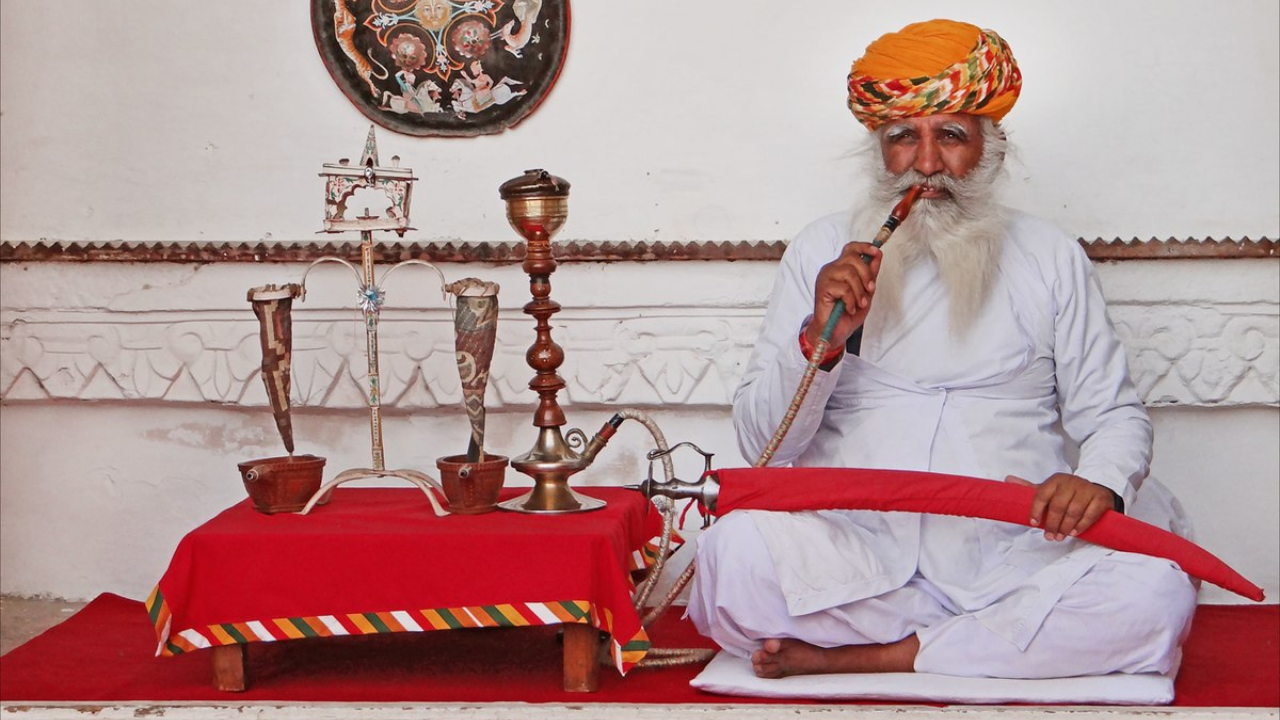
L'origine du tabac à chicha remonte au 16e siècle en Inde, sous le règne de l'empereur moghol Akbar. Le tabac introduit pour la première fois par les Portugais a suscité la curiosité et l'expérimentation en Inde. À cette époque, un médecin nommé Hakim Abul-FathGilani a créé le premier narguilé conçu pour filtrer la fumée à travers l'eau, réduisant ainsi ses effets dangereux.
Cette première chicha était basique, généralement créée à partir de matériaux d'origine locale en utilisant des coques de noix de coco comme base. L’examen des origines de la chicha en Inde révèle à quelle vitesse l’élite moghole l’a adoptée. Bientôt infiltrée dans la culture indienne, fumer la chicha était non seulement une expérience agréable mais aussi un signe de rang et d'élégance pour l'élite.
· Histoire du tabagisme du narguilé en Iran

L'Iran a joué un rôle essentiel dans l'évolution de la chicha au XVIIe siècle. Les artistes persans ont raffiné le narguilé avec des ornements élaborés et des bases en verre, renforçant son attrait et apportant une touche artistique raffinée au design.
Avec le recul, vous constaterez que l'habitude de fumer le narguilé s'est fermement développée dans la société persane, généralement dans le cadre d'événements entre amis et en famille.
Les Perses ont également été parmi les premiers à rehausser le tabac avec des arômes, produisant ainsi une expérience de fumage plus variée et plus amusante. Pour beaucoup en Iran, la chicha était plus qu’un simple passe-temps. C’était une déclaration de talent artistique et de cohésion communautaire. Quelque chose que l’on voit encore aujourd’hui dans les événements persans.
· Tabac à chicha en Europe
La chicha est arrivée en Europe au XVIIIe siècle sous l'influence et le commerce ottomans. Intrigués par cette curiosité culturelle, les commerçants et visiteurs européens l'ont rapportée notamment en France et au Royaume-Uni.
La chicha a d'abord été adoptée dans les cafés, notamment en France, où elle symbolisait le loisir et l'exotisme.
La noblesse européenne a adopté cette coutume au fil du temps et, à mesure qu'elle devenait de plus en plus populaire, elle a commencé à refléter un symbolisme de raffinement et l'attrait des traditions orientales.
Si l’on y regarde de plus près, la présence de la chicha en Europe était davantage une activité sociale distinctive. Il s'agissait de montrer l'interaction culturelle entre l'Orient et l'Occident plutôt que l'utilisation quotidienne.
· Histoire du tabac à chicha aux États-Unis et au Canada

Les immigrants du Moyen-Orient ont introduit la chicha en Amérique du Nord au début du 20e siècle. La pratique a pris de l'ampleur dans les années 1960, lorsque les troupes américaines sont revenues du Moyen-Orient, ramenant les contes et la coutume de fumer le narguilé.
Vous observerez comment les cafés à chicha se sont ouverts dans les grandes villes américaines et canadiennes au fil des décennies, à mesure que les jeunes générations s'intéressaient aux traditions multiculturelles.
Reflétant la scène cosmopolite de l’Amérique du Nord et l’attrait universel de fumer la chicha. Aujourd’hui, les cafés à chicha fleurissent partout en Amérique du Nord et offrent une expérience authentique alliant aspects traditionnels et modernes.
· Tabac à chicha au Pakistan et au Bangladesh

La chicha est arrivée au Pakistan et au Bangladesh au XVIIe siècle sous l'influence de l'Inde moghole. Encore courant dans les zones rurales du Pakistan, le narguilé est traditionnellement fabriqué à partir d'argile. Beaucoup dans ces régions considèrent que fumer le narguilé est une habitude quotidienne étroitement liée aux événements sociaux.
Le Bangladesh a un passé similaire où la chicha a une valeur à la fois culturelle et récréative. Si vous visitez les zones rurales, vous constaterez que la chicha est un pilier des réunions de famille et des célébrations communautaires. Soulignant ainsi son importance en tant que lien avec la coutume et l’amitié.
· Tabac à chicha au Népal
La tradition de la chicha est arrivée au Népal grâce à des liens culturels étroits avec l'Inde voisine. La chicha est arrivée dans la société népalaise au XIXe siècle et est devenue particulièrement répandue parmi l'élite et dans les cercles royaux. L’examen de l’histoire de la chicha au Népal peut vous aider à comprendre comment la coutume a changé avec le temps pour se mélanger aux coutumes régionales.
Bien que les types de tabac conventionnels soient plus courants aujourd’hui, les jeunes générations ont développé une tendance moderne au narguilé. Les salons de chicha sont courants dans les villes du Népal et attirent à la fois les résidents et les visiteurs désireux de découvrir cette fusion de méthodes de fumage traditionnelles et modernes.
· Histoire du tabac à chicha au Moyen-Orient et à Gaza
Fumer la chicha est important dans la culture du Moyen-Orient avec des traces remontant à l'Empire ottoman au 16ème siècle. La chicha a évolué et est devenue un incontournable des cafés et des événements sociaux dans des pays comme l'Égypte, la Syrie et Gaza.
Vous constaterez que fumer la chicha est adopté par une culture communautaire qui se savoure généralement au cours de longues discussions et accompagnée de thé ou de café.
À Gaza, la chicha reste un élément essentiel de la vie quotidienne malgré les difficultés socio-économiques, car elle représente la communauté et la ténacité. Pour les Moyen-Orientaux, la chicha est une coutume vénérée qui relie les générations et pas seulement une habitude.
· Fumer du tabac à chicha en Turquie
Au début du XVIIe siècle, l'histoire de la chicha en Turquie a vu la création du narguilé, une variante turque classique du narguilé. Avec leurs décorations minutieuses et artisanales, les artistes turcs ont fait de la chicha un symbole culturel.
Se promener dans les cafés à chicha d'Istanbul révèle à quel point le rituel continue d'être vénéré avec certaines coutumes et méthodes de préparation transmises au fil des ans.
Stricte dans ses coutumes, la culture turque de la chicha a une étiquette d’utilisation particulière. Pour les Turcs, fumer la chicha est pratiquement cérémonial, combinant un art séculaire, un rituel et un sentiment d'histoire.
· Histoire du tabac à chicha en Afrique
C'est en partie grâce aux commerçants du Moyen-Orient et d'Europe que fumer la chicha est devenu bien connu en Afrique, notamment en Afrique du Nord, au XVIIIe siècle. L'Égypte a particulièrement accueilli la chicha, car ses cafés sont devenus des centres d'activité sociale.
Des gens de tous âges viennent ici dans une culture animée de la chicha pour créer une atmosphère sociale et décontractée.
Fumer la chicha s'est finalement étendu à d'autres régions d'Afrique, notamment au Soudan et au Maroc, où cette coutume est toujours vénérée. Les coutumes africaines de la chicha sont parfois basées sur des goûts uniques, et cette coutume reste le pilier du contact social à travers le continent.

Développement moderne du tabagisme à chicha
Le voyage de la chicha ne s'est pas arrêté à sa diffusion internationale. Des différents matériaux aux saveurs innovantes, les dernières années ont offert des avancées étonnantes. En fait, ils rendent la chicha plus polyvalente et attrayante qu’auparavant.
1. Narguilé fabriqué à partir de différents matériaux
Matériaux traditionnels
Historiquement, les narguilés étaient fabriqués à partir de matériaux simples comme le bois, l’argile et même les coquilles de noix de coco. Les matériaux eux-mêmes reflétant souvent la culture et le savoir-faire de la région, ces matériaux naturels vous permettent d'apprécier une expérience simple et terreuse.
Même s’ils étaient encombrants et manquaient de portabilité, les premiers narguilés avaient un attrait unique que beaucoup apprécient encore. Chaque fois que vous en utilisiez un, vous vous connectiez à une coutume de longue date qui s’étendait sur des millénaires.
Innovations en verre et en métal
À la fin du XIXe siècle, les fabricants de narguilés ont commencé à utiliser largement le verre et le métal. Le verre vous offrait une apparence soignée et élégante, tandis que le métal vous offrait une durabilité et de nombreux choix de conception.
Au début des années 1900, des artistes égyptiens ont commencé à peindre à la main des bases de narguilé en verre.
Ces modifications ont amélioré la structure et la durée de vie de votre narguilé ainsi que son apparence. Le verre vous permet également de voir l'eau bouillonner, ce qui donne à chaque séance une toute nouvelle couche sensorielle.
Accessory Development
Le 20ème siècle a vu un boom des accessoires pour narguilé pour améliorer votre expérience de fumage. Du cuir aux tissus synthétiques lavables, les matériaux des tuyaux ont évolué et vous ont aidé à maintenir une meilleure hygiène.
Les dispositifs de gestion de la chaleur ajoutés dans les années 2000 vous ont permis de contrôler encore davantage la répartition de la chaleur et la qualité de la fumée. Vos séances de chicha sont devenues plus raffinées avec chaque nouvel accessoire, vous permettant d'organiser votre configuration pour obtenir l'expérience idéale.
2. Evolution des saveurs du tabac à chicha
Saveurs traditionnelles
À l’origine, le tabac à chicha était simple, généralement dérivé de feuilles de tabac foncées et sans saveur, ce qui lui donnait un goût fort et terreux. Parfois associé à de la mélasse ou du miel, ce tabac traditionnel procurait une sensation forte et puissante qui demandait à la fois expertise et habileté à gérer. Pendant des millénaires, cette simple combinaison a formé l’identité gustative et a permis à chaque bouffée d’avoir un goût authentique.
Introduction de Mu'Assel
Le tabac sucré et aromatisé, Mu'Assel, est apparu pour la première fois au Moyen-Orient au XVIIIe siècle. Pour vous, cela représentait un changement majeur puisque cela apportait des arômes de miel et de fruits à votre fumée.
Au début, Mu'assel n'était disponible que dans des saveurs de fruits de base comme la pomme ou le raisin, mais il a permis à un public plus large de déguster la chicha puisque la fumée devenait moins forte et plus douce. D’une pratique de niche, fumer la chicha est devenu une activité sociale adoptée par une population plus large.
Diverses options de saveurs
À la fin du XXe siècle, en particulier dans les années 1990, le tabac à chicha aromatisé est devenu populaire et a attiré un large éventail de nouvelles saveurs sur le marché.
Des agrumes et de la menthe aux combinaisons exotiques comme la mangue-menthe et la myrtille, ces saveurs vous permettent de découvrir de nouvelles sensations et de varier chaque séance.
Les fabricants ont commencé à expérimenter des combinaisons inattendues, vous offrant d'innombrables choix adaptés à votre humeur ou à votre environnement, rendant ainsi chaque session différente.
Alternatives soucieuses de votre santé
Des alternatives soucieuses de leur santé sont désormais disponibles pour satisfaire les personnes qui souhaitent profiter de la chicha sans plus de problèmes de santé.
Souvent dérivés de feuilles de thé, les mélanges à chicha à base de plantes sans tabac sont devenus bien connus car ils offraient la même expérience sociale sans nicotine.
De nos jours, vous disposez d’options telles que des substituts sans goudron et sans sucre, ainsi que des systèmes sans combustion qui réduisent la fumée.
Ces alternatives respectueuses de la santé ont changé le secteur et vous permettent de savourer une expérience de fumage de chicha plus réfléchie et personnalisée.

Comment le tabac à chicha a eu un impact sur la société
· Perceptions de la santé
On pourrait supposer que fumer la chicha de temps en temps n'a aucune conséquence à long terme, mais des études révèlent le contraire.
Les séances de chicha durent généralement beaucoup plus longtemps que fumer une cigarette ; par conséquent, vous inhalez plus de fumée. Vous entrez ainsi davantage en contact avec des composés nocifs.
À chaque bouffée, vous ingérez des quantités importantes de nicotine et de goudron, car l’eau de la chicha ne filtre pas les ingrédients dangereux. Vous êtes également exposé aux mêmes problèmes de santé majeurs liés au tabagisme, tels que le cancer du poumon, les maladies cardiaques et les problèmes respiratoires.
Compte tenu du caractère commun de la chicha dans les situations sociales, les maladies infectieuses constituent également une menace. Compte tenu de ce degré d’exposition, il faut comprendre que la chicha n’est pas inoffensive au premier abord.
· Comportements sociaux
Pour beaucoup, la chicha est bien plus que simplement fumer. Il s’agit d’une coutume sociale bien ancrée dans de nombreuses sociétés différentes. Que vous fêtiez une fête ou que vous vous détendiez entre amis, la chicha agit généralement comme un point focal encourageant la conversation et la connexion.
Vous retrouvez cette pertinence culturelle dans des pays comme les pays du Moyen-Orient et d’Asie du Sud, où partager un narguilé est une démonstration de convivialité. Certaines zones peuvent avoir des cafés entiers pour fumer la chicha, créant ainsi des zones spécialement destinées à cette activité.
La chicha est un moyen d'expression culturelle et de lien social puisque cette caractéristique commune renforce les liens entre amis et parents.
Cependant, cette expérience commune implique également que davantage de personnes sont engagées dans cette activité, la normalisant ainsi et générant une chaîne d’influence attirant davantage de personnes dans le giron.
· Politiques de santé publique
En ce qui concerne la réglementation de la chicha, vous découvrirez que cela présente des défis uniques pour les gouvernements du monde entier.
Contrairement aux cigarettes, la chicha est généralement consommée dans les salons ou les cafés, ce qui rend difficile pour les autorités de faire respecter correctement les règles relatives à l'usage du tabac. Alors que certains pays disposent d'une législation moins complète, d'autres ont promulgué des interdictions sévères de fumer à l'intérieur, y compris la chicha.
La chicha implique des coutumes sociales et culturelles distinctes, de sorte que les règles peuvent être source de division et fréquemment contestées par des groupes qui la considèrent comme faisant partie de leur héritage.
Pour les propriétaires d’entreprises de chicha, qui doivent jongler entre les obligations légales et les attentes de la communauté, cette disparité des politiques pourrait être source d’incertitude.
Engager le secteur de la chicha entraînera inévitablement des difficultés qui influenceront les pratiques de votre entreprise et le respect des normes sanitaires.
· Technologie et innovation dans le secteur
La technologie commence à transformer le secteur de la chicha et à proposer des idées à la fois intéressantes et utiles. Les technologies de gestion de la chaleur constituent un domaine de développement. Ils vous permettent de réguler la température sans dépendre du charbon de bois conventionnel.
En plus d'une meilleure expérience de tabagisme, cela réduit votre consommation de monoxyde de carbone. Les narguilés modernes sont également plus durables et à la mode puisqu’ils sont composés de matériaux sophistiqués comme le verre ou l’acier inoxydable.
Ces évolutions répondent à vos exigences fonctionnelles et esthétiques, vous offrant des choix qui représentent à la fois le goût personnel et la facilité technique.
De plus, vous trouverez davantage de narguilés électroniques, ou e-narguilés, qui reproduisent l’expérience de la chicha sans utiliser de vrai tabac.
Cette technologie cherche à résoudre les problèmes de santé et vous propose un substitut qui préserve néanmoins les caractéristiques conventionnelles de la chicha.
FAQ
1. D’où vient la chicha ?
La chicha est originaire d'Inde, vers le 16ème siècle.
2. Qui a inventé le narguilé ?
Le narguilé est souvent attribué au médecin indien Hakim Abul-Fath Gilani.
Conclusion
Le voyage que fait le tabac à chicha à travers l’histoire est aussi riche que la fumée qu’il produit. Embrassez chaque séance comme faisant partie de ce grand héritage.
Plus de ressources:
Invention de la chicha – Source : JOCHAMP
Histoire de la chicha – Source : BRITANNIQUE
.webp)