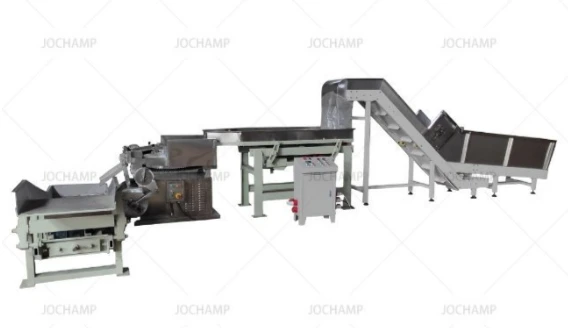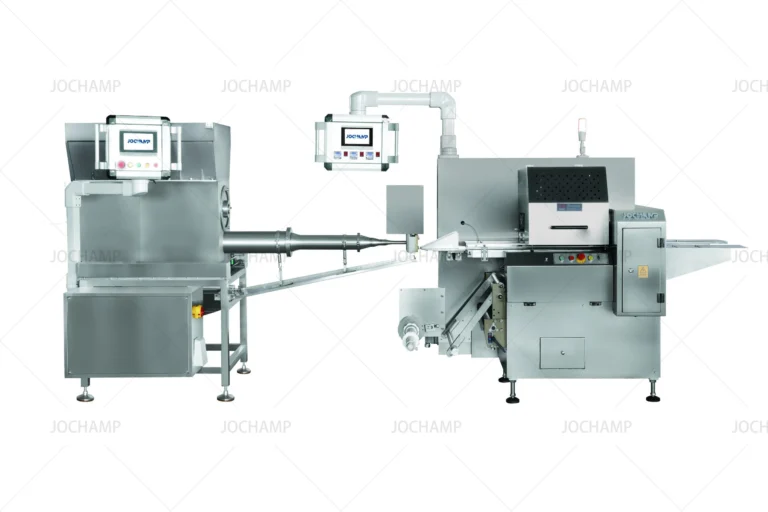
Efficient tobacco processing requires more than simply cutting leaves into smaller pieces. Cutting speed, strip consistency, material handling, labor requirements, and equipment stability can all influence the quality and efficiency of the overall process. An Electric Tobacco Cutting Machine uses a powered cutting mechanism to process tobacco leaves into strips at a controlled rate, making it suitable for applications ranging from small-scale production to larger processing operations.
Compared with fully manual cutting, electric equipment can provide more consistent operation and reduce the physical effort required from operators. Depending on the machine type, the cutting widths can be adjustable, while the production capacity can vary from dozens of kilograms per hour up to hundreds of kilograms per hour. For instance, some commercial machines are designed to operate in the range of 100–400 kg/h, while some compact machines process about 30–40 kg/h.
1. What Is an Electric Tobacco Cutting Machine and How Does It Work?
What Is an Electric Tobacco Cutting Machine?
An Electric Tobacco Cutting Machine is a powered processing machine designed to cut whole or partially prepared tobacco leaves into strips of a specified width. Unlike a manual cutter, it uses an electric motor to drive the cutting or feeding mechanism, allowing the cutting process to continue with less direct physical effort.
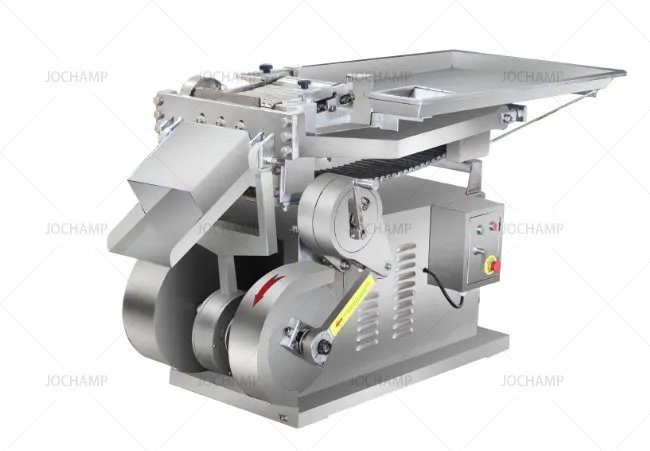
Machine construction varies according to production requirements. The common structure includes a feeding device, cutting chamber, rotating blades or knives, motor, control devices, and the protection case. Additionally, there can be dust extraction connections, overload protection, or sensors for better safety and stability of the process.
The required specifications depend on the intended production volume. Compact equipment may use a motor around 1.1 kW and handle approximately 30–40 kg of material per hour, while larger industrial machines can use several kilowatts of motor power and reach hundreds of kilograms per hour.
How Does the Cutting Process Work?
The operating process generally begins with feeding prepared tobacco leaves into the machine. The material is guided toward the cutting mechanism, where rotating knives or other cutting components shear the leaves into strips. The resulting tobacco then exits the cutting area for collection or further processing.
Cutting performance depends on several variables, including:
- Cutting width: Determines the approximate size of the finished strips.
- Blade condition: Sharp and properly maintained knives support cleaner cutting.
- Feeding stability: Consistent material feeding helps maintain uniform output.
- Material condition: Moisture, leaf structure, and preparation can affect cutting behavior.
- Machine speed: Cutting speed needs to match the material and required output.
Some machines allow the cutting width to be adjusted. Commercial models can offer ranges such as 1–20 mm, while specialized equipment may provide much finer settings. This allows processors to select a suitable cut according to their production requirements.
What Are the Main Benefits of an Electric Tobacco Cutting Machine?
Consistent Cutting Results
Consistency is another important benefit of an Electric Tobacco Cutting Machine. Manual cutting can result in differences in strip width because cutting pressure, blade movement, and operator technique may change during operation. A powered machine can provide more controlled cutting by maintaining a stable relationship between the feeding system and cutting mechanism, while adjustable settings allow the cutting width to be adapted to different processing requirements.
Nevertheless, the quality of cutting requires not only a well-designed machine but also some additional factors. The sharpness of blades, humidity of tobacco, pressure during feeding, and proper machine adjustment also have to be considered in order to achieve the stability of the process and uniformity of the resulting tobacco strips.
Improved Cutting Efficiency
One of the main advantages of an Electric Tobacco Cutting Machine is its ability to maintain continuous cutting with less manual intervention. After proper feeding and adjustment, the motor starts working at a certain speed and thus ensures the stability of the process. Compact machines process about 30–40 kg/h, while large machines can operate up to 150–500 kg/h or more.
For shisha tobacco producers facing high-volume processing and inconsistent manual cutting speeds, SHISHAPACK’s tobacco cutting machine is a good choice. It provides adjustable cutting widths between 2-25 mm and a capacity of up to 400 kg per hour. The use of a PLC touch screen and easy-to-use design ensures convenient production processes without many manual interventions.
Reduced Manual Labor
The Electric Tobacco Cutting Machine can decrease the physical effort of cutting the tobacco repeatedly. Since there is no need to manually move the blade with every new batch, workers only have to feed materials into the machine, watch it in operation, check the result, and take care of the prepared tobacco. The higher the volume of production, the bigger the difference becomes.
However, the use of the machine does not mean that manual labor is not needed. Workers still have to monitor the state of the machine, check materials, clean up the cutting zone, sharpen the blade, and deal with any abnormalities in the process. The key point here is that the machine does most of the cutting process.
Easier Tobacco Processing
The fourth benefit is a more organized processing workflow. If it is properly designed, an Electric Tobacco Cutting Machine can ensure that feeding, cutting, adjusting, and collecting of cut materials can be done at once without needing the operator to perform them repetitively.
Also, depending on the machine design, additional features such as adjustable settings, touch controls, overload protection, safety sensors, and a dust collection system can make the use of the machine even easier. For instance, a dust collection system will help deal with particles created during cutting, while safety covers and sensors will minimize the contact of the operator with moving parts of the machine.
Conclusion
The use of an Electric Tobacco Cutting Machine can improve the efficiency of tobacco processing because of increased cutting speed, improved consistency of cut strips, reduced repetitive manual work, and easier daily use. In comparison with manual cutting, using powered equipment will help achieve a more stable cutting process and deal with larger volumes of products.
For shisha tobacco producers looking to improve productivity and streamline their cutting process, an Electric Tobacco Cutting Machine can be a practical solution. With experience in tobacco processing equipment, SHISHAPACK is an experienced manufacturer providing tobacco cutting solutions for different production needs. If you have questions about the equipment or its application, feel free to contact us.