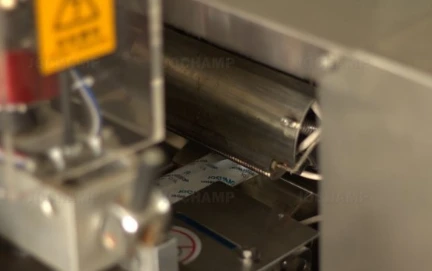
Shisha tobacco is characterized by its sticky nature, shredding into leaves, and high concentration of molasses, making it difficult to pouch and carton shisha tobacco. Material wastage, poor material feeding, incorrect dosing, and poor sealing can increase shisha production costs and waste material. Material wastage can be minimized through improvement in four main aspects: choice of packaging material, precision, real-time monitoring, and standard procedures. An Automatic Shisha Tobacco Packaging Line can assist in minimizing wastage of materials.

1. Material Selection & Standardization: Reducing Waste in an Automatic Shisha Tobacco Packaging Line
Material choice for an Automatic Shisha Tobacco Packaging Line has a direct influence on scrap levels, package protection, and production efficiency. Films with irregular thickness, unsuitable friction properties, and poor sealing capabilities might create feeding problems and result in more rejected packs. Material and pouch standardization would help avoid such problems before production.
1.1 Utilization of Down-Gauged and Recyclable Materials
Multilayer aluminum laminate pouches are traditionally used for Automatic Shisha Tobacco Packaging Line products. These materials provide protection from external factors and preserve the product freshness and quality. Thicker materials are associated with higher costs of packaging and waste generation. Manufacturers may consider alternative films that are thinner but offer similar barrier properties.
- Film Down-Gauging: Switching from 100 µm to 60-70 µm laminate would reduce the amount of film used by 30%-40%, assuming a similar packing surface. Yet, the manufacturer must ensure puncture resistance, barrier, and sealing properties prior to changing film types.
- Paper-Based Composites: Alternative paper-based materials with adequate barrier coatings can help reduce traditional plastic use. Their recyclability will depend on the type of coating, laminate construction, and availability of recycling capabilities.
1.2 Trimming Seal Margins and Standardizing Sizes
Large fin seals and end seals use extra films without any improvement in package quality. Optimization of seal dimensions will help save on films if the final packaged item satisfies all seal strength requirements and is not prone to leaks.
It will be beneficial for production processes if the sizes of pouches are the same for 50g, 100g, and 250g products. The reason for this is that when several products have the same film width and production parameters, it takes less time to adjust machines and to produce sample pouches.
2. Equipment Upgrade & Precision Control: Reducing In-Process Losses in an Automatic Shisha Tobacco Packaging Line
Automatic Shisha Tobacco Packaging Line’s sticky molasses can accumulate on feeding surfaces, interfere with product flow, and contaminate sealing areas. Accurate weighing, stable feeding, and reliable temperature control are therefore essential for reducing product giveaway and rejected pouches.
2.1 Multi-Head Dosing and Non-Stick Feeding Systems
Volumetric fillers might have difficulty dealing with sticky tobacco since variations in material density and fluidity might result in the dispensing of different amounts. Combination multi-head weighers are more likely to ensure proper portion control by weighing product with several heads and choosing the best combination that corresponds to the required weight.
For instance, the Shishapack 100-120 ppm Shisha Tobacco Packaging Line is specifically designed for shisha tobacco packaging processes. The equipment configuration includes a 14-head or 20-head Teflon-coated combination scale and rotary distributor devices for a stable feeding process. It depends on the specific product, packaging form, and machine configuration whether the line speed reaches 120 packages per minute with regard to soft packaging of 50g–250g pouches.
The use of a non-stick contact surface will help avoid tobacco accumulation, and the proper configuration of the feeder will ensure the even distribution of material. One should also pay attention to the inspection of feeding and sealing zones to prevent tobacco particles from being entrapped within the seals.
2.2 Mechanical Performance Metrics Comparison
| Operational Metric | Legacy Manual / Semi-Automatic Line | Modern Automatic Shisha Tobacco Packaging Line | Potential Waste Reduction Benefit |
| Dosing accuracy | Manual or volumetric dosing with greater variation | Multi-head combination weighing | Reduces product giveaway and underweight rejects |
| Heating Temperature Control | Restricted adjustment options or inconsistent heating | Independent monitoring and control of multiple heating zones | Helps avoid damaged packaging film and weak seals |
| Seal overlap width | Wider margins and more manual adjustment | Precisely controlled sealing and cutting | Reduces unnecessary film consumption |
| Feeding consistency | More manual intervention | Automated feeding and distribution | Helps reduce jams and spillage |
The actual improvement depends on the Automatic Shisha Tobacco Packaging Line equipment, material properties, maintenance condition, and operating procedures. Manufacturers should establish baseline scrap rates and compare production data after upgrading the line.
3. Digital Monitoring: Reducing Waste in an Automatic Shisha Tobacco Packaging Line
Digital monitoring helps manufacturers identify packaging defects earlier and avoid repeating the same production errors. Instead of relying entirely on end-of-line inspections, an Automatic Shisha Tobacco Packaging Line can use sensors and inspection systems to detect irregularities while production is running.
3.1 Vision Inspection and Pneumatic Rejection
Vision inspection systems with high resolution are able to detect pouch size measurements, readability of date codes, print registration, and other sealing faults. When such an inspection system is linked with a proper rejection module, it becomes possible to automatically reject packages that do not pass the predefined criteria.
In this way, defective primary pouches will not enter cartoning and further secondary packaging processes. Consequently, manufacturers will save on wasted cartons, labels, and other outer packaging materials. The inspection system performance shall match the speed of production, and sometimes special sealing tests become necessary.
3.2 Predictive Maintenance and OEE Tracking
Dull blades, poorly functioning servo motors, and misalignments of sealing units can lead to film tearing, poor cuts, and continuous package rejection. Constant monitoring of vibration, temperature, and performance allows the maintenance department to recognize upcoming issues and prevent extended periods of downtime.
OEE tracking and monitoring of material usage and scrap will help to better control waste. If reject rates rise after a film change or machine adjustment, the cause can be identified and corrected quickly instead of allowing the problem to continue throughout the production run.
4. Personnel Training & Lean Management for an Automatic Shisha Tobacco Packaging Line
Even sophisticated machinery requires skilled operators and reliable manufacturing processes. Proper allocation of responsibility, periodic inspections, and waste management logs can ensure the effective operation of an Automatic Shisha Tobacco Packaging Line.
4.1 Changeover Standard Operating Procedures (SOPs)
Inconsistencies in operator procedures during film roll changes and product changeovers lead to significant waste. SOPs should include film alignment, roll splicing, tension adjustment, temperature setting, and package testing.
Technicians need to verify that the first packaged units satisfy all the criteria (weight, appearance, packaging) prior to resuming normal operation of the machine. Saving the parameters of each product format will speed up future changeovers.
4.2 Waste Tracking and Workplace Ergonomics
Daily scrap audits will allow managers to identify when losses happen. Waste could be classified as startup waste, feeder spillage, wrong weights, sealing issues, cut-off errors, and damage to packaging film. Comparative analysis of these numbers per shift will show which issues need immediate correction.
Operators have to clean feeding hoppers and the areas that come into contact with the product following the approved schedule of maintenance activities. Maintaining room conditions, correct feeder adjustments, and elimination of excess tobacco could help to improve process flow and minimize blockages. Employee training in reporting recurrence of problems would also help to avoid small problems turning into big ones.
Conclusion
To reduce waste in shisha tobacco packaging, some improvements have to be made in material selection, dosing accuracy, sealing, automated inspections, and employee training. A properly set-up Automatic Shisha Tobacco Packaging Line could help manufacturers to control product giveaway, minimize pouch rejection, and save on packaging materials.
If you have any questions about reducing waste and Automatic Shisha Tobacco Packaging Line selection for your plant, please don’t hesitate to contact Shishapack for consultation.