
The global tobacco industry has reached a turning point which opens new opportunities for investors in 2025. Shisha tobacco and cigarettes have different business models, market conditions and growth potential. This article provides an in-depth analysis of these industries which will help investors choose the best option for long-term benefits.
Industry Overview – Shisha Tobacco vs. Cigarette

Cigarette Industry
The global cigarette market is valued at about USD 821.8 billion in 2024. Its value is expected to reach USD 963.6 billion growing at a compound annual growth rate (CAGR) of 2.3% by 2030. This market is dominated by major corporations such as Philip Morris International, British American Tobacco and Japan Tobacco International.
Source: Precision Business Insights
Shisha Tobacco Industry
The shisha tobacco market is growing significantly. Its value is estimated at USD 3,049.1 million in 2024. It is projected to reach USD 4,557.0 million growing at a CAGR of 4.1% by 2034. This growth provides more opportunities for new business owners as compared to the cigarette industry. This is due to the increase in global popularity and less saturated market.
Source: Future Market Insights
Market Trends and Consumer Preferences
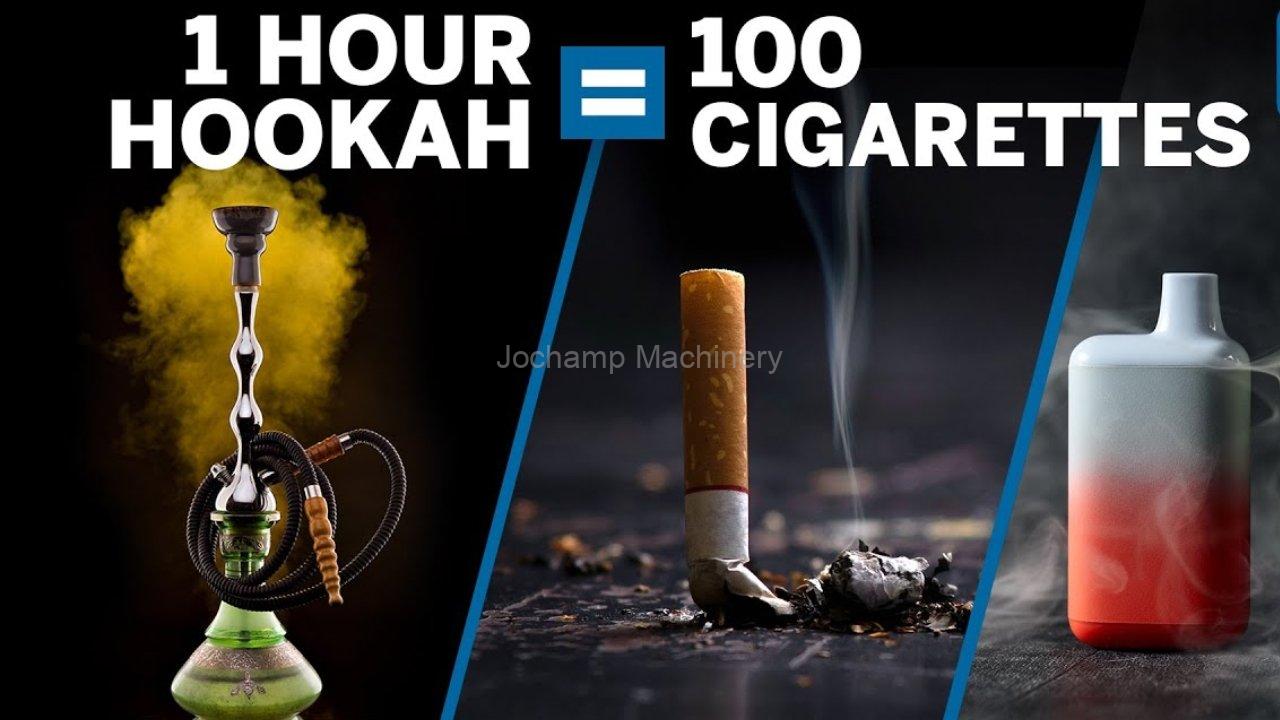
Decline in Cigarette Consumption
The consumption of cigarettes all over the world has decreased by a good deal due to the growing awareness to health as same as the campaigns against smoking. According to the World Health Organization (WHO), in 2022, about 1 in 5 adults smoked tobacco, a figure that was down from 1 in 3 adults in 2000. This decline has also been due, in part, to regulatory pressures and increasing taxes. Take for example many countries have been increasing taxes on the products of smoking. Younger generations are also selecting an alternative to nicotine products like e-cigarettes and vapes.
Rise of Shisha Tobacco
Shisha tobacco has become very popular and, especially amongst young people. In just 6 years, the global market for shisha tobacco is expected to be 33% higher. The growth of shisha lounges and cafes has also made shisha smoking a popular social activity among the youth. Fruit, mint, and other blended flavors, which are some of the flavors of Shisha tobacco. This appeals to a large consumer base looking for that unique experience.
Shisha Tobacco vs. Cigarette Business: Investment Requirements

Investing in the tobacco industry needs a careful assessment of many factors. Both cigarette and tobacco need investment costs for infrastructure, compliance and operations, but their needs vary.
Infrastructure and Equipment
Establishing a cigarette making factory requires a large amount of capital for advanced machinery that can handle high-speed production. This cost covers cigarette-making machines, packaging equipment and quality control systems. Large industrial areas are also needed because of the size of production to fit all equipment and storage needs.
Whereas for shisha production, blending and flavoring processes are less mechanized which reduces the overall operational cost. The equipment needed is usually simpler and can be produced in smaller spaces. This further reduces the initial capital costs.
Regulatory Compliance
There are strict rules and regulations for the cigarette business such as health warnings, restrictions against advertisements and high taxation. Cigarette businesses also need a dedicated legal team that must continuously monitor any policy changes and act accordingly. This also adds up to the operational cost.
The Shisha tobacco business also faces regulatory issues, but these are highly affected by region. Some areas don’t have strict rules on shisha products which makes the compliance burden easier. But an increase in health awareness might tighten the global regulations which might need vigilance.
Related: Shisha Tobacco Safety Guidelines: Key Practices for Manufacturers
Operational Costs
Cigarette manufacturing suffers from high operational costs due to the need for skilled labor, maintenance of complex machines and the purchase of high-quality tobacco. Due to the competitive nature of the market, marketing costs are also very high.
Shisha tobacco industries usually have lower running costs. The production process doesn’t need complex machinery and can be automated. This further reduces the need for professionals to run it. Shisha tobacco has diverse flavor profiles that allow for premium pricing. This also leads to an increase in profit margins.
Profitability and Return on Investment (ROI)

Cigarette Business
In the third quarter of 2024, the cigarette industry had an 88.9% profit margin. Health concerns and regulations led to a huge hit on profit margins and had a knock on effect to reduced global consumption. Altria, for example, said its total cigarette revenue in the second quarter of 2024 dropped 13% from a year earlier. Long term ROI projections are worrisome due to challenges from market demand decreases and stringent rules.
Shisha Tobacco Business
Premium price is offered by the Shisha tobacco industry thus offering favorable profit margins. Wholly, the shisha tobacco market has very little competition compared to the cigarette market and so it is skyrocketing, which makes it the fastest growing market globally. This growth is fueled by the rise in popularity of younger audiences and growth into emerging markets. Positive ROI forecast is due to growth of the market and possibility of higher margins through flavor offerings.
Shisha Tobacco and Cigarette Business Predictive Analysis for 2025

· Regulatory Landscape
By 2025 the tobacco industry will be subjected to strict regulations. New policies are being made by governments around the world to reduce smoking worldwide. For instance, the Tobacco and Vapes Bill was passed by the UK government in November 2024. It is designed to create the next generation smokeless through gradual withdrawal of tobacco going sales.
Among other regulatory reforms, it is expected to put dramatic pressure on production and sales. The rules will have to be followed and the operations will have to change.
Related: Understanding Shisha Tobacco Regulations: A Guide for Business Owners
Consumer Behavior Trends
In the US, cigarette sales have plummeted from nearly 400 billion units in 2001 to fewer than 140 billion units by 2022. It’s this type of decline (over 56% in two decades) which can be seen. Alternative tobacco products are becoming the way of the future for consumers.
Also new markets have emerged across Asia, Latin America and all across Africa where shisha smoking has been spotted making the globalization of shisha usage grow. The change is happening because of cultural trends among young people. With Shisha becoming more popular, so is the wide range of flavors.
Shisha smoking is traditionally and socially done in Middle Eastern countries as a gathering, celebration or a get together.
Technological Advancements
Innovative technologies have changed tobacco industries. New flavors are also being added by the manufacturers, as well as enhanced product quality to satisfy the buyer preferences. Since gaining popularity, eco friendly manufacturing methods are being used by many companies. They’re also sourcing raw materials from the sustainable sources and meeting environmental standards and consumer’s expectation.
Because of stricter regulations and new technologies the tobacco industry is going to be changed a lot by the year 2025. Companies would have to spend more in building new products and new technologies as they are becoming more health conscious consumers.
Risk Assessment for Hookah Tobacco and Cigarette Business

Cigarette Industry Risks
There are a lot of legal problems and lawsuits to consider for the cigarette industry. For example, in October 2024 major tobacco companies reached a $32.5 billion settlement in Canada to settle long running lawsuits. These settlements ruin the companies’ reputation and money. This is dominated by players like Philip Morris International and British American Tobacco. It is difficult for new businesses to enter the market, due to the high level of competition. Also, this saturation restricts its growth chances, for other firms.
Hookah Tobacco Industry Risks
The health risks related to the hookah tobacco market is also criticized. Smoking exposes you to harmful toxins that may trigger new regulations, according to research. But some regions have made it harder for hookah tobacco to lower health threats. Majorly the success of hookah depends on social trends. Market changes related to consumer choice and cultural attitude can bring instability into the market and may affect demand and profitability. These trends need to be monitored and companies’ strategies are needed to change.
Conclusion

In 2025, investing in the tobacco industry deserves a careful review of market trends, choices in consumer preferences and regulations. Its rising popularity and variety of flavor offerings offer Shisha tobacco growth opportunities. However the cigarette industry is grappling with falling consumption and tough regulatory environment. For those investors looking to get in on the growing shisha market need to partner with a specialist equipment provider. Shishapack is an expert shisha packing machines and solutions for the manufacture of everything, which makes production easier and gives us a better quality.
FAQs
What are the primary health concerns associated with shisha tobacco compared to cigarettes?
Smoking either shisha or cigarettes can be bad for health. Long sessions involving shisha smoking and combustion on charcoal can lead to users of shisha smoking exposing themselves to higher degrees of carbon monoxide, heavy metals and carcinogens. Lung cancer, heart disease, respiratory problems, are some of the chronic diseases connected with cigarette smoking.
Related: Shisha Tobacco Health Risks and Precautions
How do the production processes differ between shisha tobacco and cigarettes?
Harvesting, drying and finely chopping the tobacco leaves, then rolling them into paper are all part of cigarette production. Shisha tobacco is produced by hand harvesting and several stages of drying. This blended, moist mixture is then packed inside the tube and is then dried in a dehydrator.
What are the cultural perceptions and social acceptability of shisha tobacco vs. cigarettes in various regions?
Shisha smoking is usually seen as a social thing in the Middle Eastern and South Asian culture and so many people enjoy that activity in a group. Considerable social criticism occurs related, typically, to a person’s individual cigarette smoking habit, which is perceived to be unhealthy at a time more and more.
How do taxation policies affect the profitability of shisha tobacco compared to cigarette businesses?
It’s global high taxes on cigarettes that largely means that cigarettes have a dramatically reduced profit margin. The region differs in the shisha tobacco taxation. There are some areas that have a low taxation that generates a higher profitability. With shisha getting more popular, it might increase taxes there so it might affect profits in the future.
What are the challenges in sourcing raw materials for shisha tobacco and cigarette production?
However, both industries depend on good quality tobacco leaves, and the crops can be impacted by crop diseases, as well as the influence of the climate and changing prices. Glycerin is also one of the ingredients used in shisha production, as well as flavors. The supply chain is complex, and has to meet regulatory standards.
.webp)